Tuesday, January 31

Deepalaya School: India - Dec 2011


First day and I'm doing whatever little I can in the time I'm here.

Role #1 - set up a learning center with books, reference materials and rooms for both group discussion and self study

Role #2 - observe and participate in classes that face challenges of large class sizes and varying learning levels

It's cold, my hands are numb and my nose is running. I'm in a concrete room with another teacher, reading out dusty book titles and thinking up ways to turn this into a functioning learning center. It's a long way from the glass panels of the North York Center Library.

The school is down a dirty alley. There are 14 classes and 500 children. Every morning at 11:15 the kids take recess and eat a quick boxed lunch of folded roti and daal or subzi. 15 min later and I'm back in the cold, concrete room. Don't underestimate the number of pesky administrative tasks I have to deal with. It's the stuff we all think we're above and all hate doing. The only thing that makes it bearable is seeing what your efforts are going toward.

The children of Deepalaya come from poor homes. Their parents are illiterate. Most of them live in the slums and some suffer from abuse. When they go home their families need their help to either run errands or earn money, so they get little to no studying done. Teaching is approached with the idea that they'll do most of their learning in class.

A learning center with the right materials and supervision will promote discipline and self study, first at school and then hopefully later on at home to properly accelerate learning and give these children hope for a future.

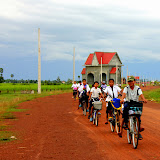
Enjoy the pics ..

d.


Wednesday, January 4

Helping Others: sure we have good intentions, but is that enough?


I spent months looking into this initiative and finding the right organizations to volunteer my time with. The more I dug, the clearer it became, a week here or there, doing whatever was required of me, was not enough.

But let me start from the beginning, and break it down to you in LEGO building blocks.

Imagine you were obese and genetics played a part in your condition. Your mother was obese, your father was obese, in fact everyone in your family was dealing with the same battles of obesity.

Now, imagine someone comes along, in good shape and with good intentions, and hands you a diet plan, a basket of healthy foods, and a treadmill. Would you take it? Yes. Does it help you in the long run? Maybe, but not as much as if you were to re-evaluate your own choices, create your own eating plan, grow your own foods and find exercise methods that coincide with your own lifestyle.

Make sense?

And so I titled this blog entry, Helping Others: sure we have good intentions, but is that enough?

I’ll focus on volunteering because I’m more familiar with it than donations and other charitable deeds.

Generally speaking, volunteerism falls into 1 of 2 groups.

A. High cost programs that recruit volunteers, usually with little to no experience; the money going toward marketing, 24/7 support, visas and accommodation. These operations fall under the term volun-tourism and there is a common concern that they take jobs away from locals.

B. Free or low cost programs that bring volunteers on board on an as-need basis, someone with a unique skill set otherwise not offered by the locals; there is little to no need for marketing, support, visa and accommodation (usually organized by the volunteer themselves), leaving the organization to focus on the programs and goal at large.

Because I want to undertake projects that falls into category B, I came up with 3 principals to guide my work:

1) People living inside the country should be actors in their own development

2) Volunteers are valuable, but should offer a unique set of skills that are otherwise not available and offered by locals

3) The focus should be on projects and the allocation of skills, time and labour, rather than a steady stream of volunteers looking for short-term experiences

The reason I am sharing this is because I think we should all think twice, when we donate money or volunteer our time, to what we are trying to help accomplish in the long run. Long standing problems require sustainable solutions.

d.

Album: Sangkheum Center for Children (SCC), Siem Reap. Cambodia.

Spectacular Image of Slum Fire

"Those with the least have the most to lose." 

Image of a slum on fire in Siem Reap, Cambodia with rumors that it was intentionally set to make room for sprawl and development.